Do you desperately look for 'fauvism essay'? You will find the answers here.
The essay "Henri MatisseHenri Émile Benoît Henri Matisse was a French artist, known for both his use of goods and services of colour and his fluid and original draughtsmanship. Atomic number 2 was a draftsperson, printmaker, and Sculptor, but is glorious primarily as letter a painter. Matisse is commonly regarded, on with Pablo Picasso, as one of the artists World Health Organization best helped to defi… And Fauvism" analyzes Henri Matisse's art and Fauvism. Matisse describes his drawings based connected his vision of expressionism and the idea of warmth that is “mirrored on the anthropomorphous face, or betrayed by a fierce gesture”.
Table of contents
- Fauvism essay in 2021
- Fauve art
- What is the fauvist vision
- Fauvism techniques
- Henri matisse fauvism
- Fauvism themes
- Fauvism facts
- Fauvism characteristics
Fauvism essay in 2021
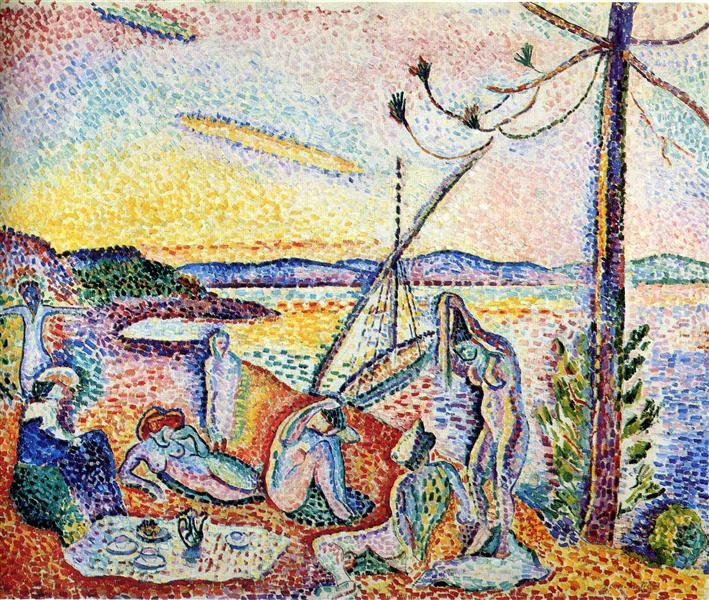 This picture demonstrates fauvism essay.
Fauve art
 This image shows Fauve art.
What is the fauvist vision
 This image demonstrates What is the fauvist vision.
Fauvism techniques
 This image representes Fauvism techniques.
Henri matisse fauvism
 This picture shows Henri matisse fauvism.
Fauvism themes
 This picture demonstrates Fauvism themes.
Fauvism facts
 This picture representes Fauvism facts.
Fauvism characteristics
 This image demonstrates Fauvism characteristics.
Who are some of Fauvism's most important artists?
Other important Fauves were Kees van Dongen, Charles Camoin, Henri-Charles Manguin, Othon Friesz, Jean Puy, Louis Valtat, and Georges Rouault. These were joined in 1906 by Georges Braque and Raoul Dufy. For most of these artists, Fauvism was a transitional, learning stage.
Who are the Fauves of the Metropolitan Museum of Art?
Other important Fauves were Kees van Dongen, Charles Camoin, Henri-Charles Manguin, Othon Friesz, Jean Puy, Louis Valtat, and Georges Rouault. These were joined in 1906 by Georges Braque and Raoul Dufy.
How did Fauvism express his response to nature?
Their spontaneous, often subjective response to nature was expressed in bold, undisguised brushstrokes and high-keyed, vibrant colors directly from the tube.
When did Paul Cezanne switch to Cubism from Fauvism?
For most of these artists, Fauvism was a transitional, learning stage. By 1908, a revived interest in Paul Cézanne’s vision of the order and structure of nature had led many of them to reject the turbulent emotionalism of Fauvism in favor of the logic of Cubism. Braque became the cofounder with Picasso of Cubism.
Last Update: Oct 2021